EVERNOW: PAST + NOW + FUTURE IMPLIED
11.02.2026—
07.03.2026
EVERNOW: PAST + NOW + FUTURE IMPLIED celebrates five decades of paintings, photography and sculpture.
Featuring: Michelle Anderson, Teresa Baker and Marita Baker, Paul Bong, Sandy Brumby, Maree Clarke, Nyakul Dawson, Nathanael Edwards, Bob Gibson, Ned Grant, Charles Jangala Inkamala, Clare Jaque Vasquez, Carbiene McDonald Tjangala, Kent Morris, Johny Nagabunji, Nellie Stewart, Ita Tipungwuti, James Tylor, Roy Underwood, Angela Watson, Tommy Watson, Regina Pilawuk Wilson, and her family Anastasia Naiya Wilson and Hayden Wilson.


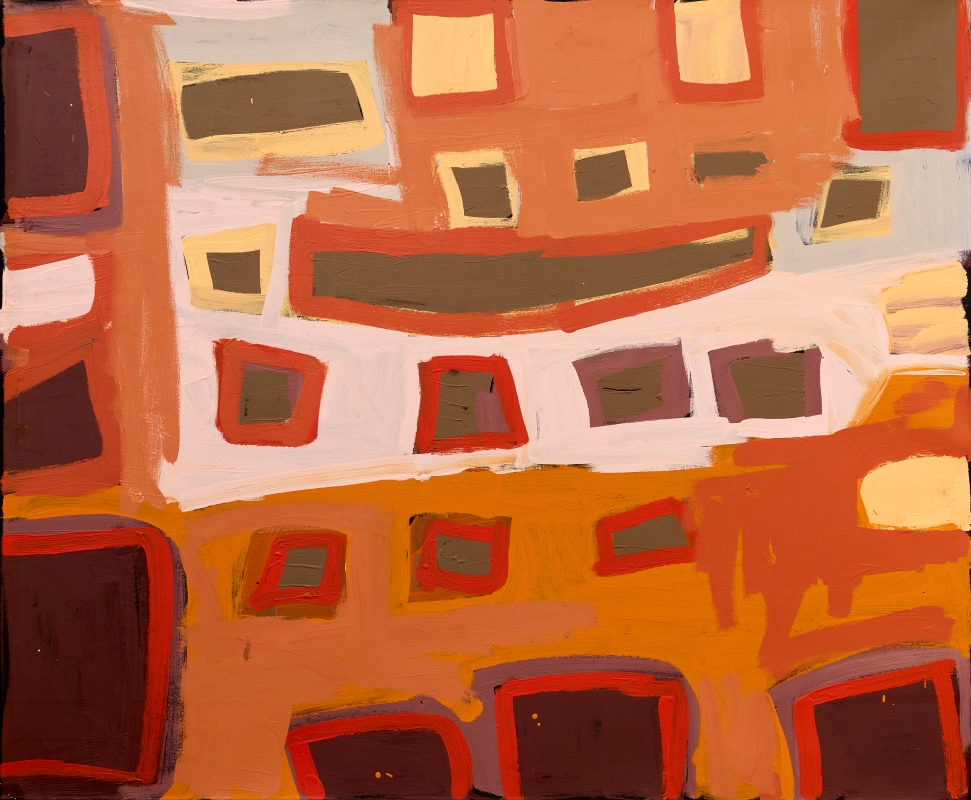
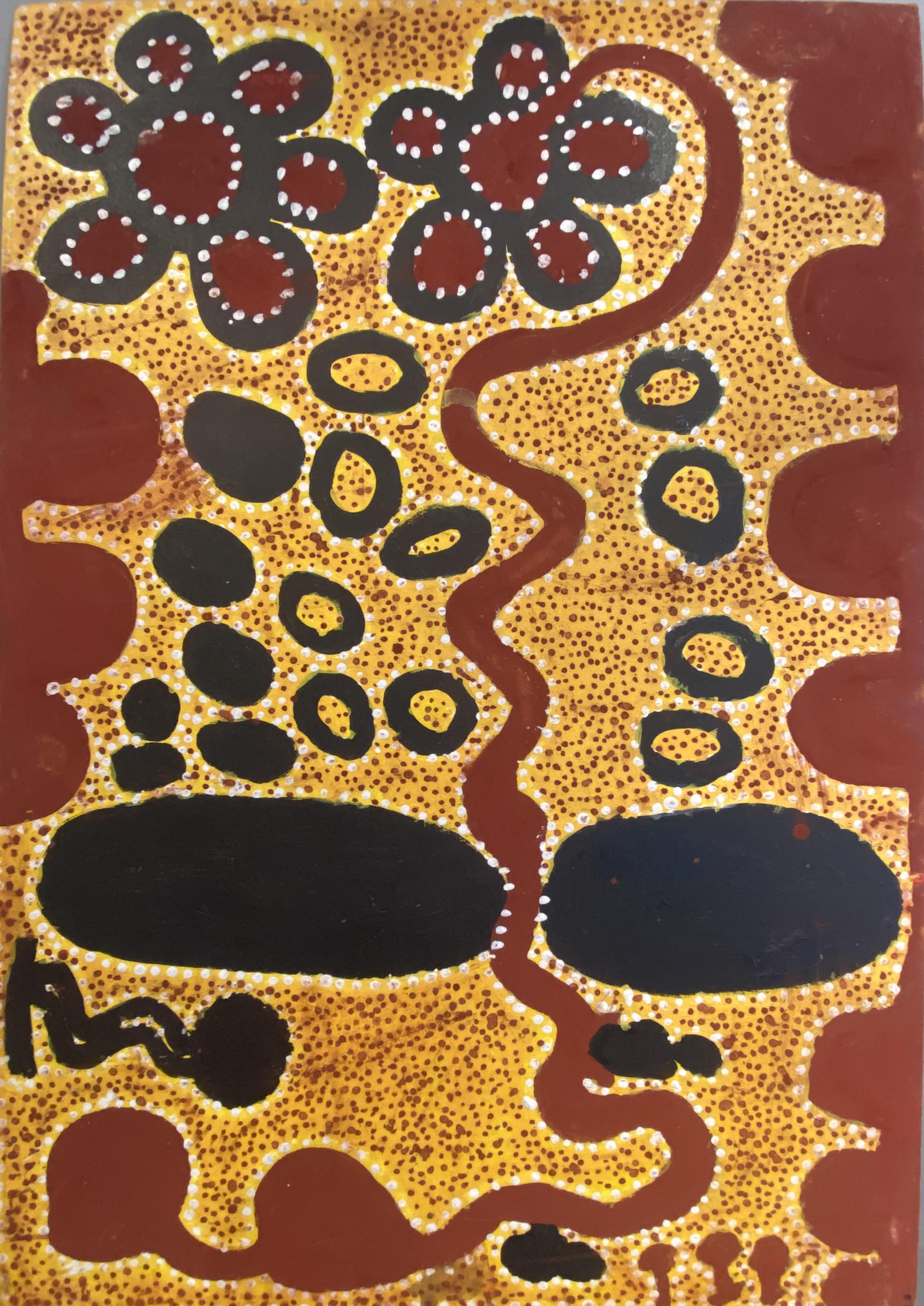
Kumanara Roy Underwood c. 1927 – 2018
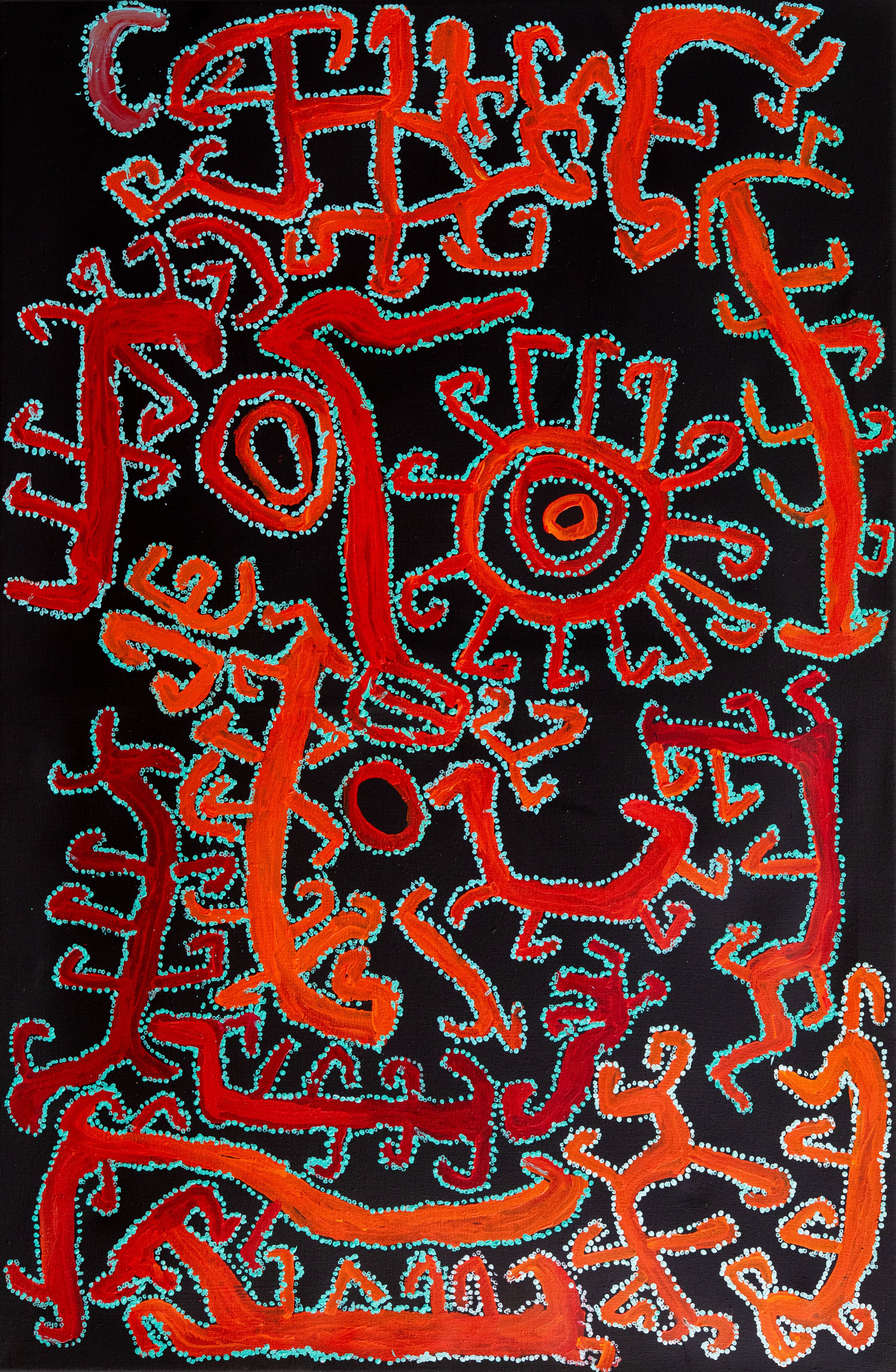
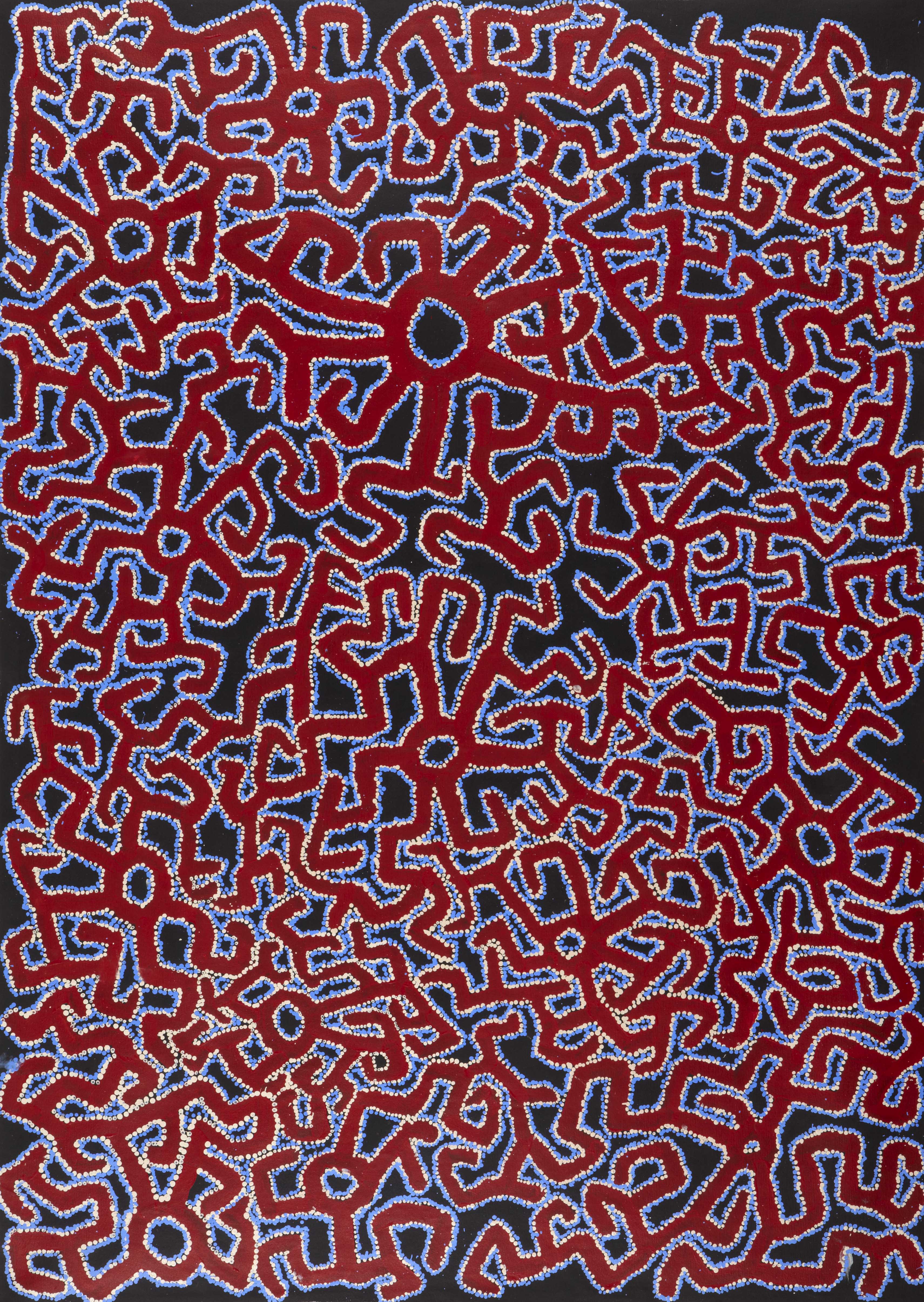
Roy Underwood is a preeminent senior artist and law man of the Spinifex People, whose practice serves as a vital bridge between ancestral Tjukurrpa and contemporary land rights. Born in the Great Victoria Desert circa 1937, Underwood was a foundational figure in the Spinifex Arts Project, established in 1996 as a vehicle for the Native Title movement.
This painting is quintessential Underwood, defined by a dense, rhythmic topography that transforms the physical desert into a vibrant optical experience. His canvases are often dominated by intricate, maze-like motifs. This repetitive linework creates a profound sense of movement, where the static image appears to shimmer and dance, simulating the destabilising effect of heat waves rising from the desert floor.
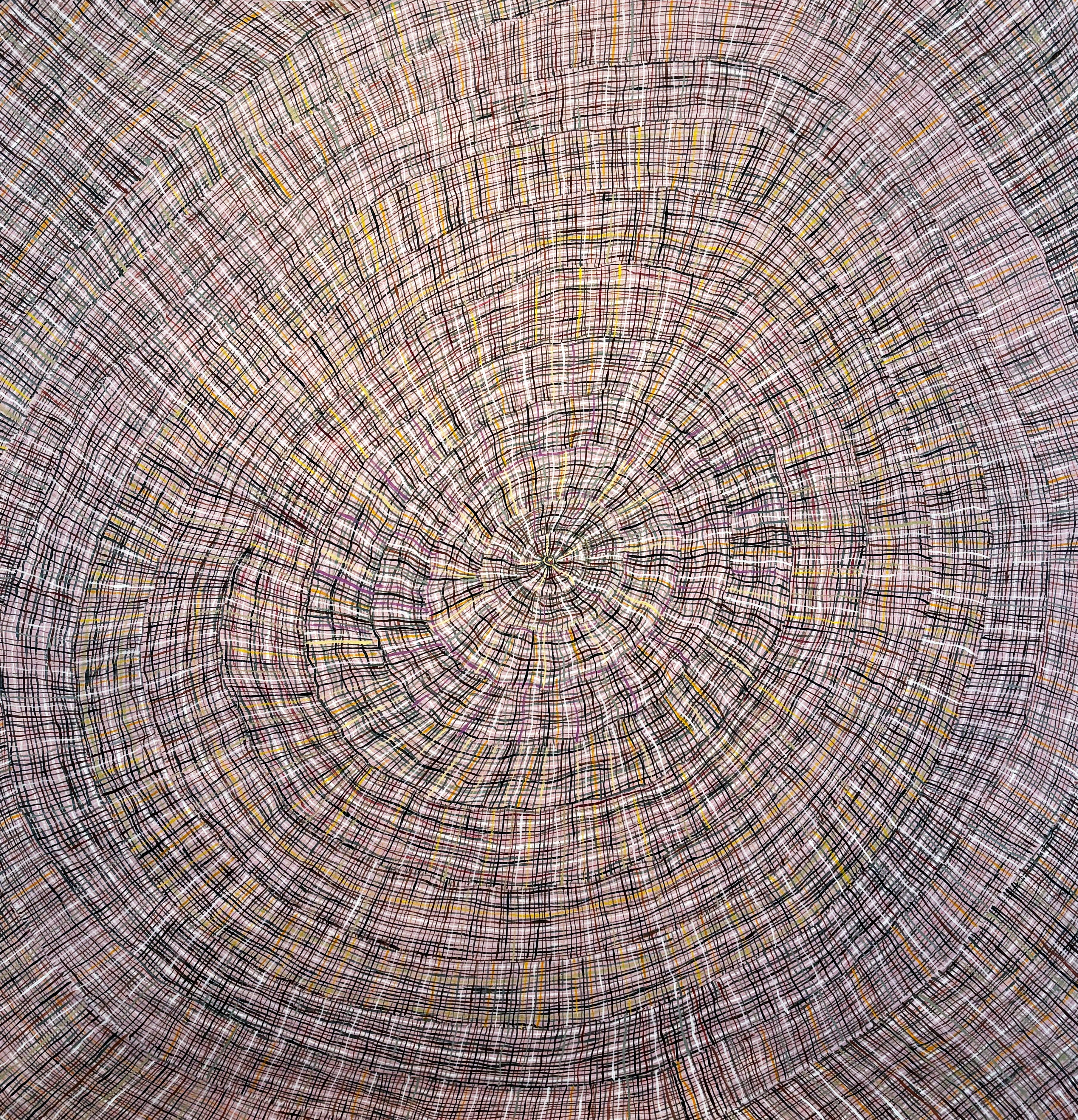
Regina Pilawuk Wilson
Born 1948 in the Daly River region, Northern Territory, Australia.
Lives and works in Peppimenarti, Northern Territory, Australia.
Regina Pilawuk Wilson is a Ngan’gikurrungurr woman.
Regina Pilawuk Wilson’s work is exhibited widely and is held in public and private collections both in Australia and internationally. She is regarded as one of Australia’s leading Indigenous artists, and is the founder of the Peppimenarti community—the permanent settlement for the Ngan’gikurrungurr people in the Daly River Region since 1973.
Peppimenarti is an important Dreaming site for the Ngan’gikurrungurr language group and informs Regina’s art and weaving practices—skills she inherited from her grandmother and mother. After attending the Contemporary Art Biennale (Pacific Arts Festival) in 2000, Regina decided to add acrylic painting to her repertoire.
Regina experimented with various painting techniques and designs during workshops held by the Darwin gallerist Karen Brown. During this time, she began translating her weaving designs and patterns to canvas, including syaw (fish-net), wupun (basket), string bags, wall mats, and sun mats.
Regina won the General Painting category of the Telstra National Indigenous and Torres Strait Islander Award in 2003 for a golden syaw (fish-net) painting. The cultural significance of message sticks—traditional forms of communication between communities—are also celebrated in her paintings.
&work-image=https://vivienandersongallery.com/wp-content/uploads/6-26-Regina-Pilawuk-Wilson-120-x-120-cm.jpg&work-artist=Regina Pilawuk Wilson )
&work-image=https://vivienandersongallery.com/wp-content/uploads/7-26_Anastasia-Naiya-Wilson_Wupun_80-x-100-cm.jpg&work-artist=Anastasia Naiya Wilson )
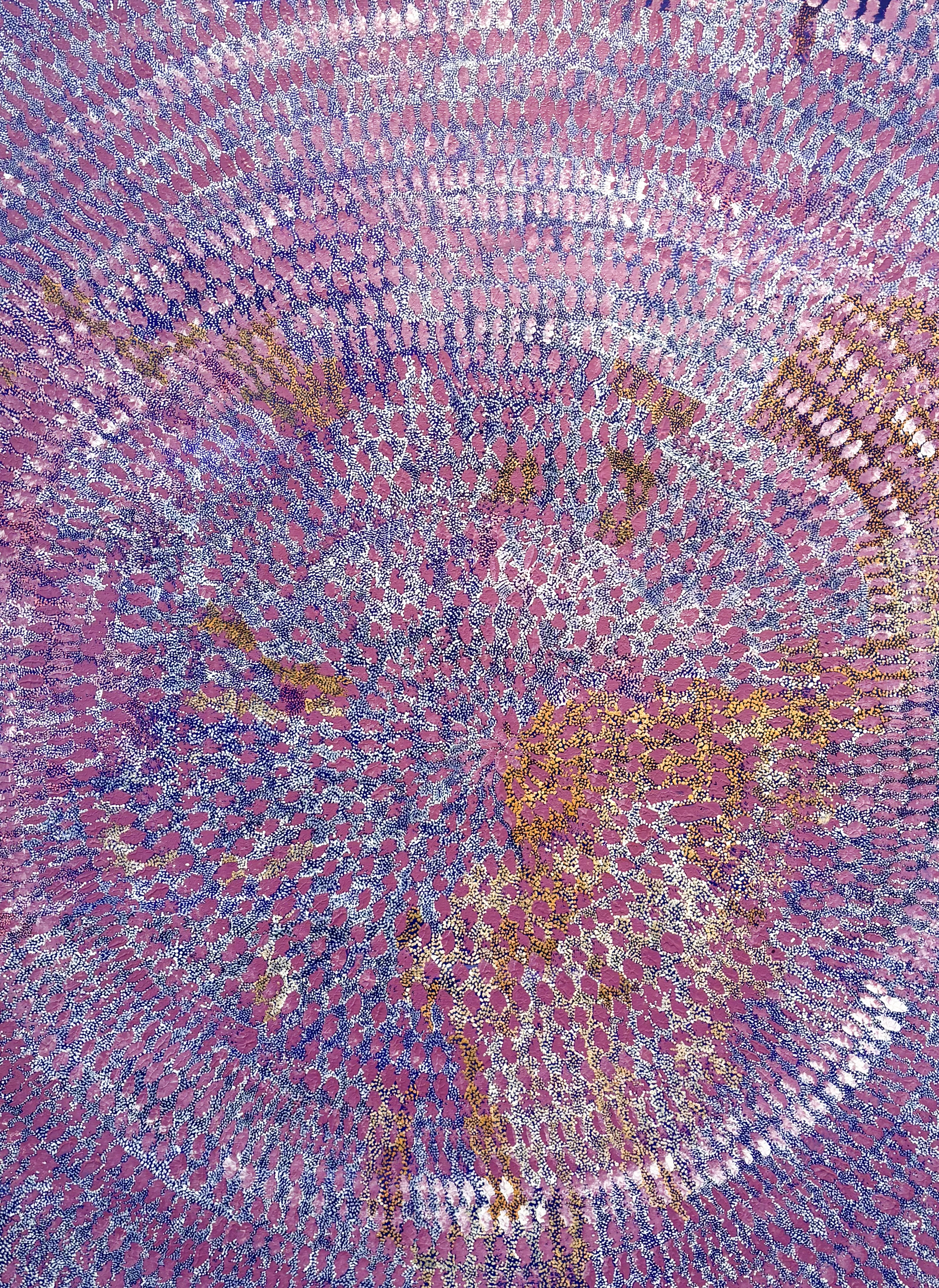
Anastasia Naiya Wilson (Regina’s middle daughter)
Anastasia Naiya Wilson, a Ngan’gikurunggurr woman, was born in 1974. She is Regina Pilawuk Wilson’s middle daughter and an emerging artist at Durrmu Arts. She has worked at the women’s safe house in Peppimenarti since 2009.
Anastasia has inherited her mother’s dingo Dreaming and often paints this subject using dark ochres and black and white. More recently, she has been developing her weaving designs on canvas, following a 2009 Basil Hall Editions workshop where she produced two etchings and one collagraph based on traditional wupun (coil basket) and warrgardi (dilly bag) designs.


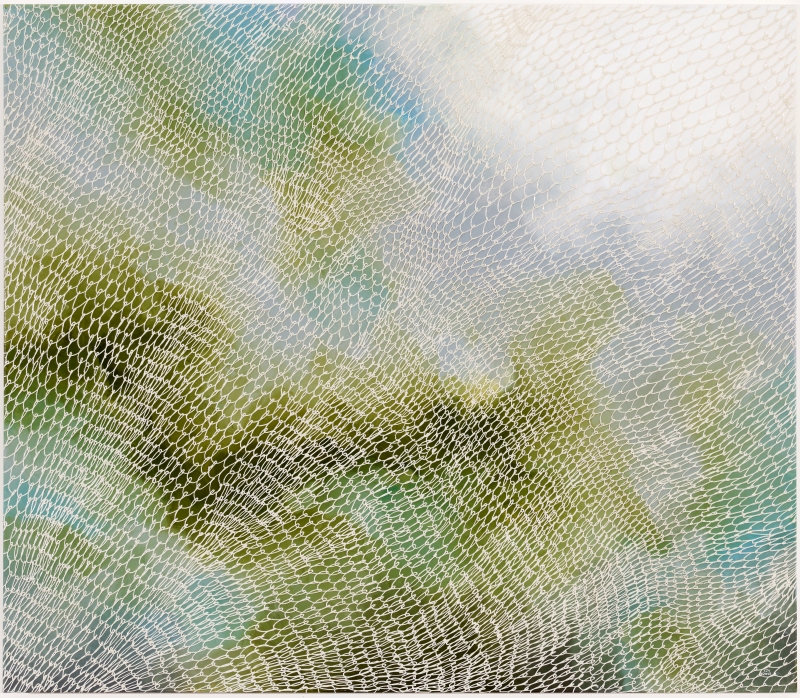

Jimmy Pike 1940 – 2002
Walmatjari language group
Great Sandy Desert, Western Australia
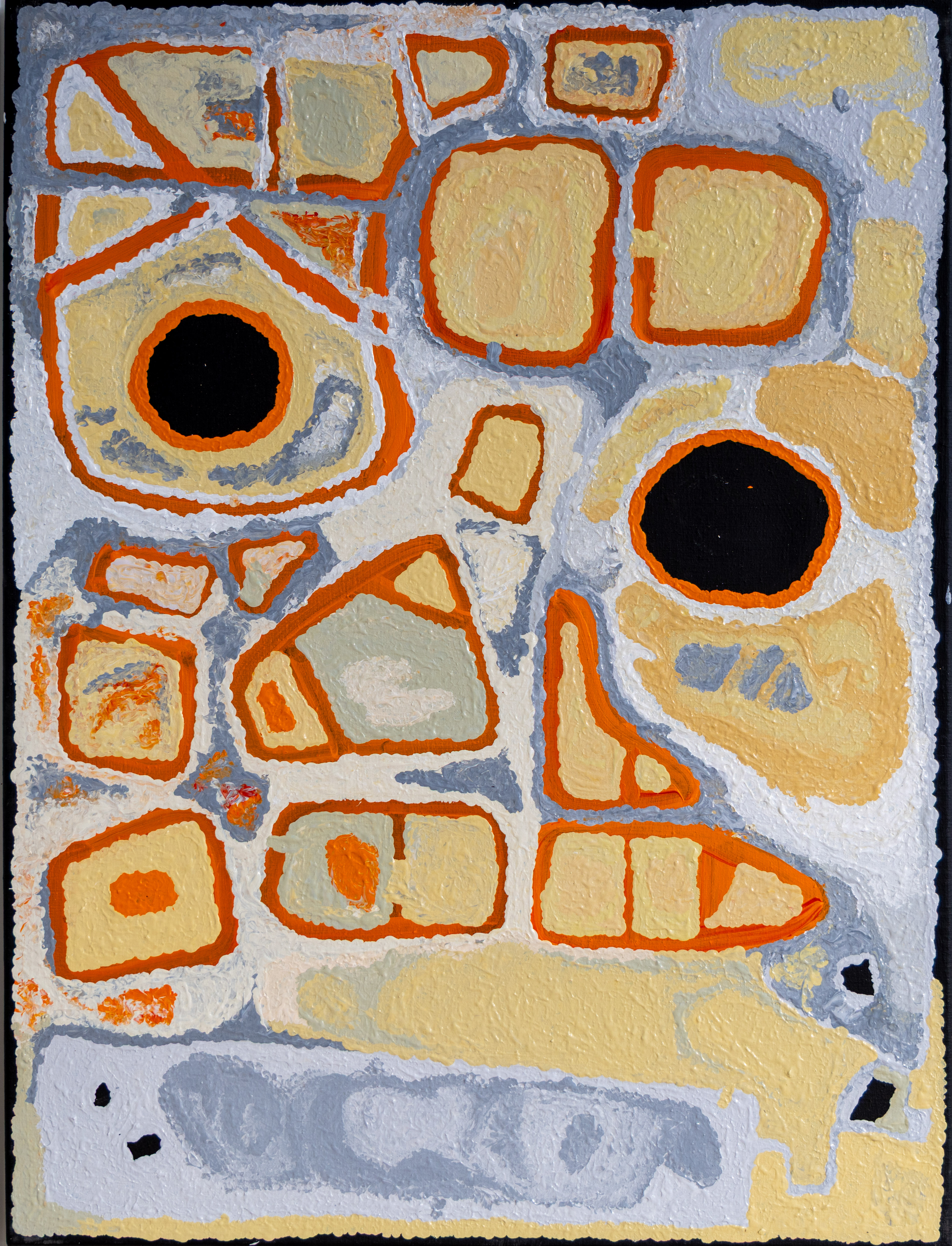
Jimmy Pike’s practice is grounded in the art of storytelling. A gifted narrator with a keen sense of humour, Pike translated the lived and ancestral realities of desert life into a visual language that is both expansive and intimate. His work encompasses waterholes, desert landscapes, animals, and plants, alongside Ngarrangkarni (Dreaming) narratives, human figures, and elements of modern technology. Together, these motifs articulate a dynamic understanding of Country—one shaped by memory, observation, and cultural continuity.
Pike had a remarkably successful commercial career from the mid-1980s onwards. His designs translated into limited edition prints and textiles during a period of growing interest across Australia in Indigenous art and artists. His success enabled him to return to a more nomadic life, setting up a bush camp with his wife, English writer Pat Lowe. Pike spent his time looking after waterholes, painting, drawing, and hunting.
This small but rare painting on canvas board was acquired at Goolarabooloo in Broome in 1987. At the time, Goolarabooloo sold artworks by artists who later became synonymous with the legends of the Balgo art movement, along with other artists from the East Kimberley who travelled through Broome returning to community or visiting family for ceremony.
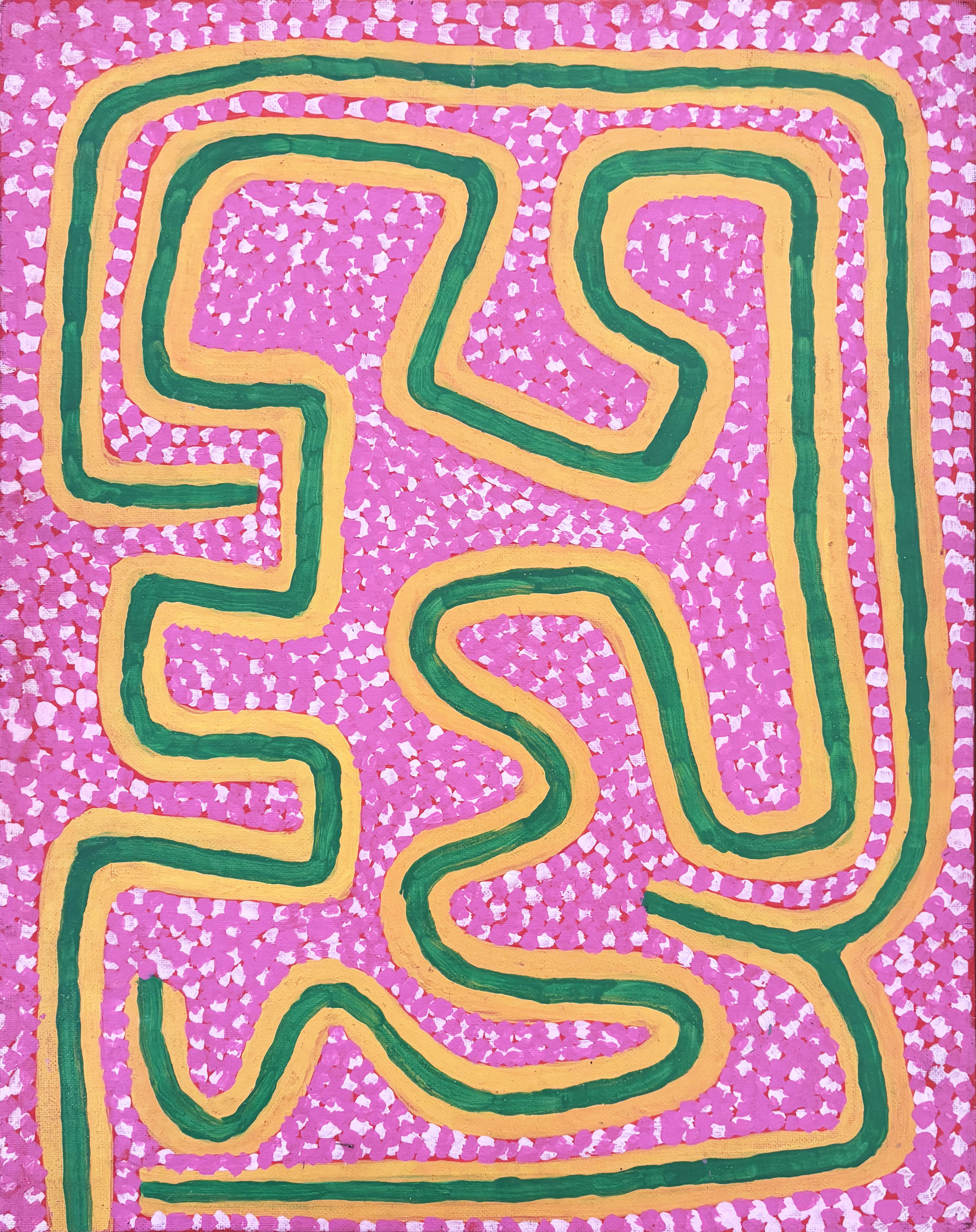

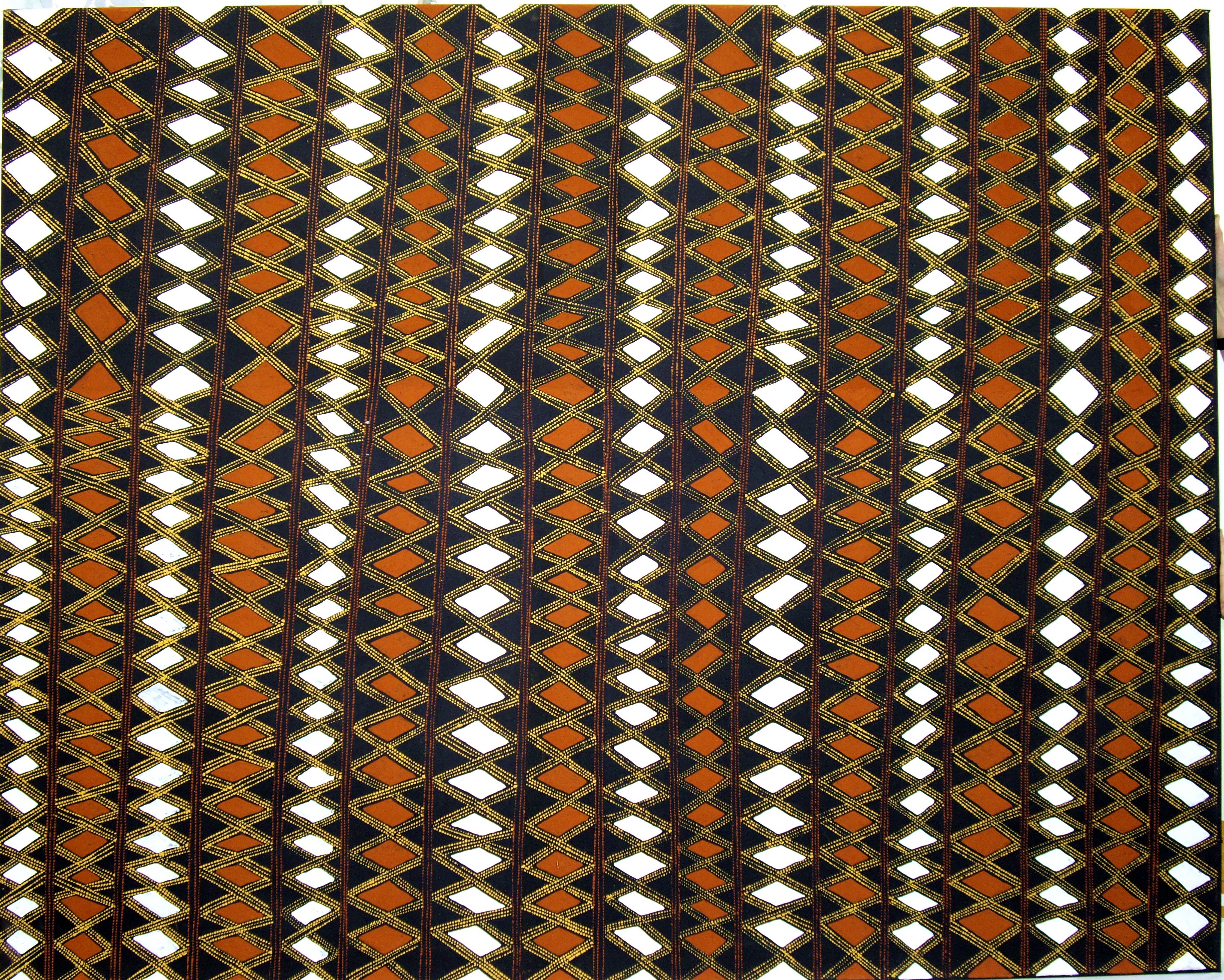

Ita Tipungwuti
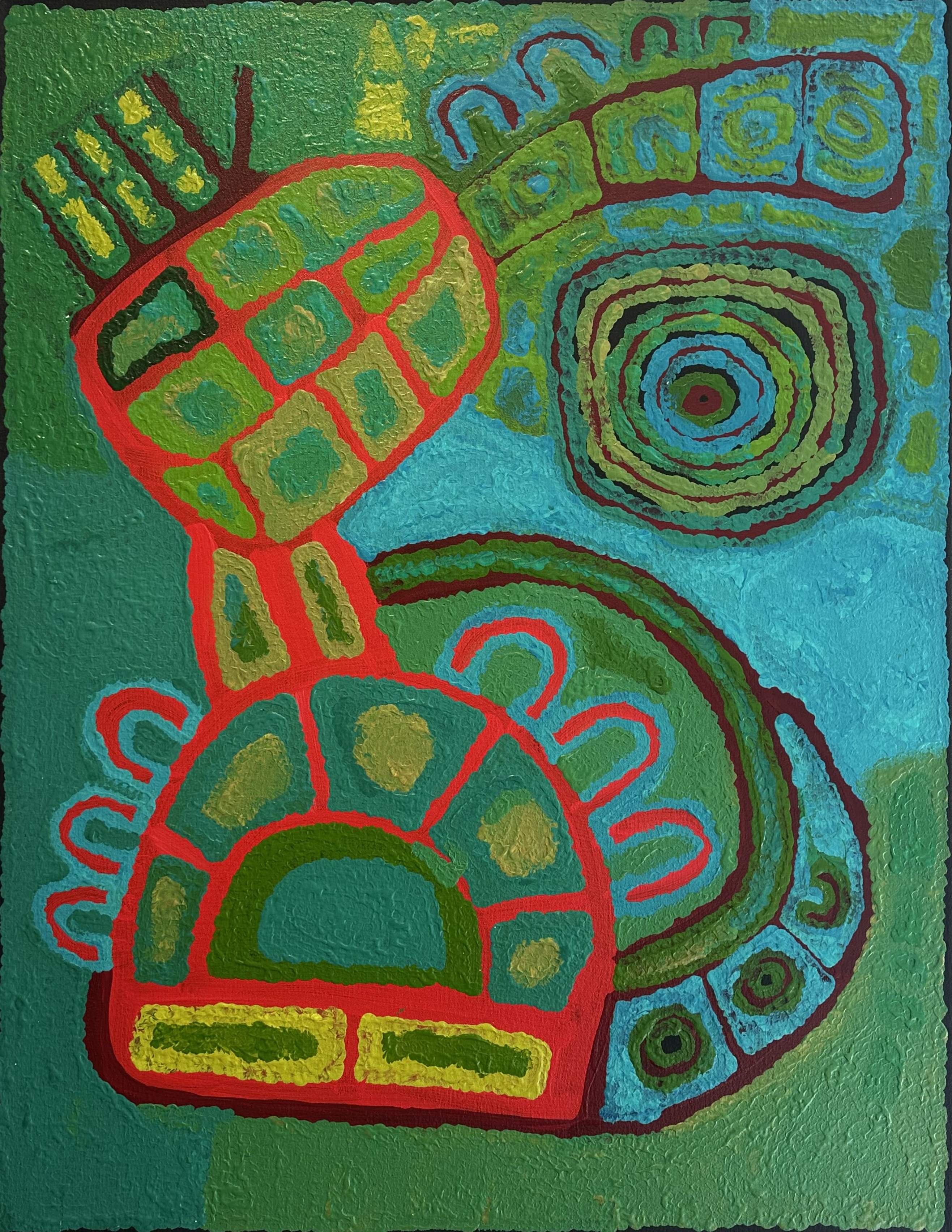
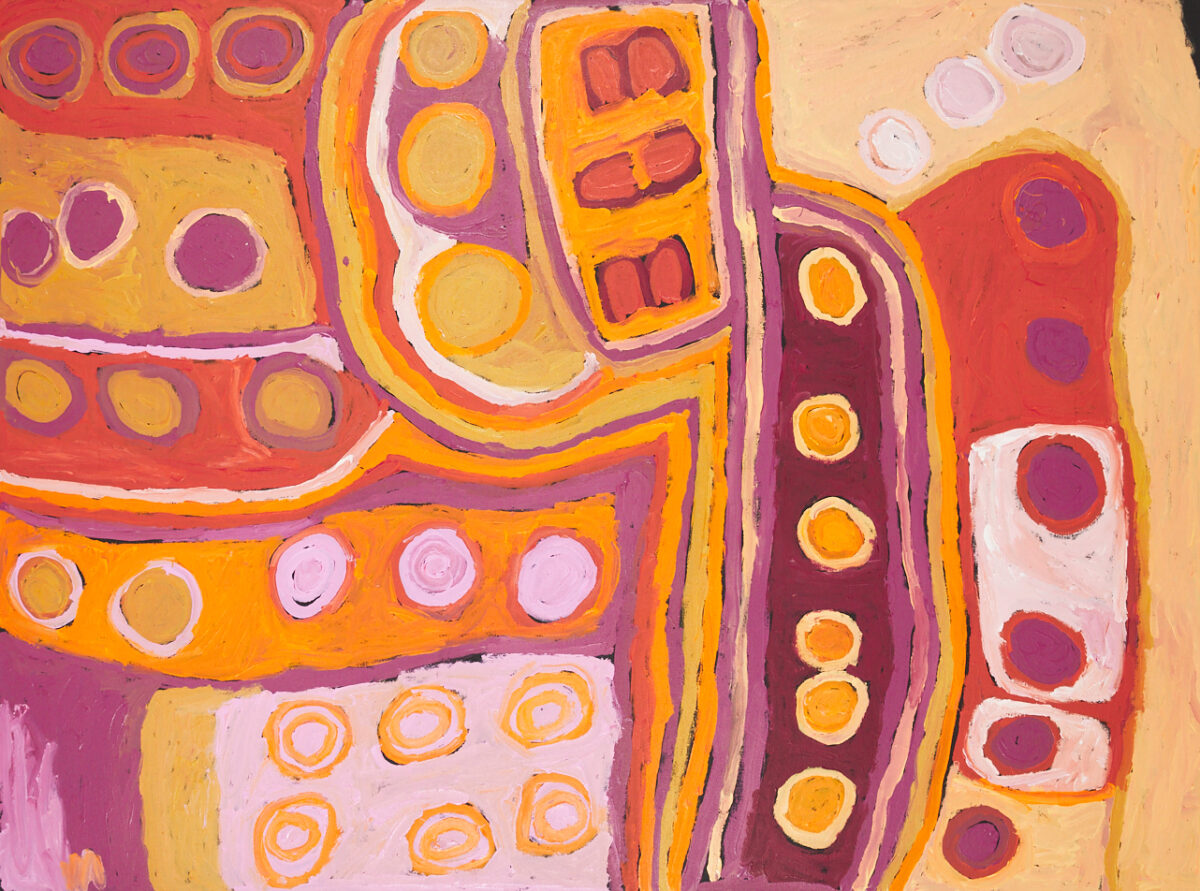
Tipungwuti here has painted Jilamara (painted designs) that represent the old language and the old ways of the Tiwi people. She is inspired by traditional Tiwi body art patterns and the graphic qualities found in the natural world, such as shells and plants.
Tipungwuti undertakes a macro study of these designs, focusing on the particular rhythm of pattern and expanding it over a large surface using traditional implements: the comb (dots) and hair brush (line), in locally sourced earth pigment.
The impetus for this painting emerged in 2006–2007, when Tiwi Design artists received a grant from the Australia Council to keep culture strong through an exploration of arts and crafts traditions and their connection to ceremony. Artists consulted images of historical Tiwi works held in archive rooms, as well as works held in major public Australian galleries and private collections.
Painters and carvers responded especially to images of old poles, recognising that the Jilamara on these monumental forms was large in scale—open designs with significant areas of negative space and a loose, generous rhythm.
Inspired by these precedents, Ita Tipungwuti began painting Jilamara on a larger scale (2.0 × 1.6 m), adopting broader gestures to reflect the pride and strength she felt when encountering these magnificent works from the past.
Engaging with prior cultural practices in this way has given younger and emerging artists renewed confidence and understanding, and a more purposeful focus when creating new work. These are not hollow designs or empty marks; they reflect an active conversation with the past, interpreted with vitality in the present.
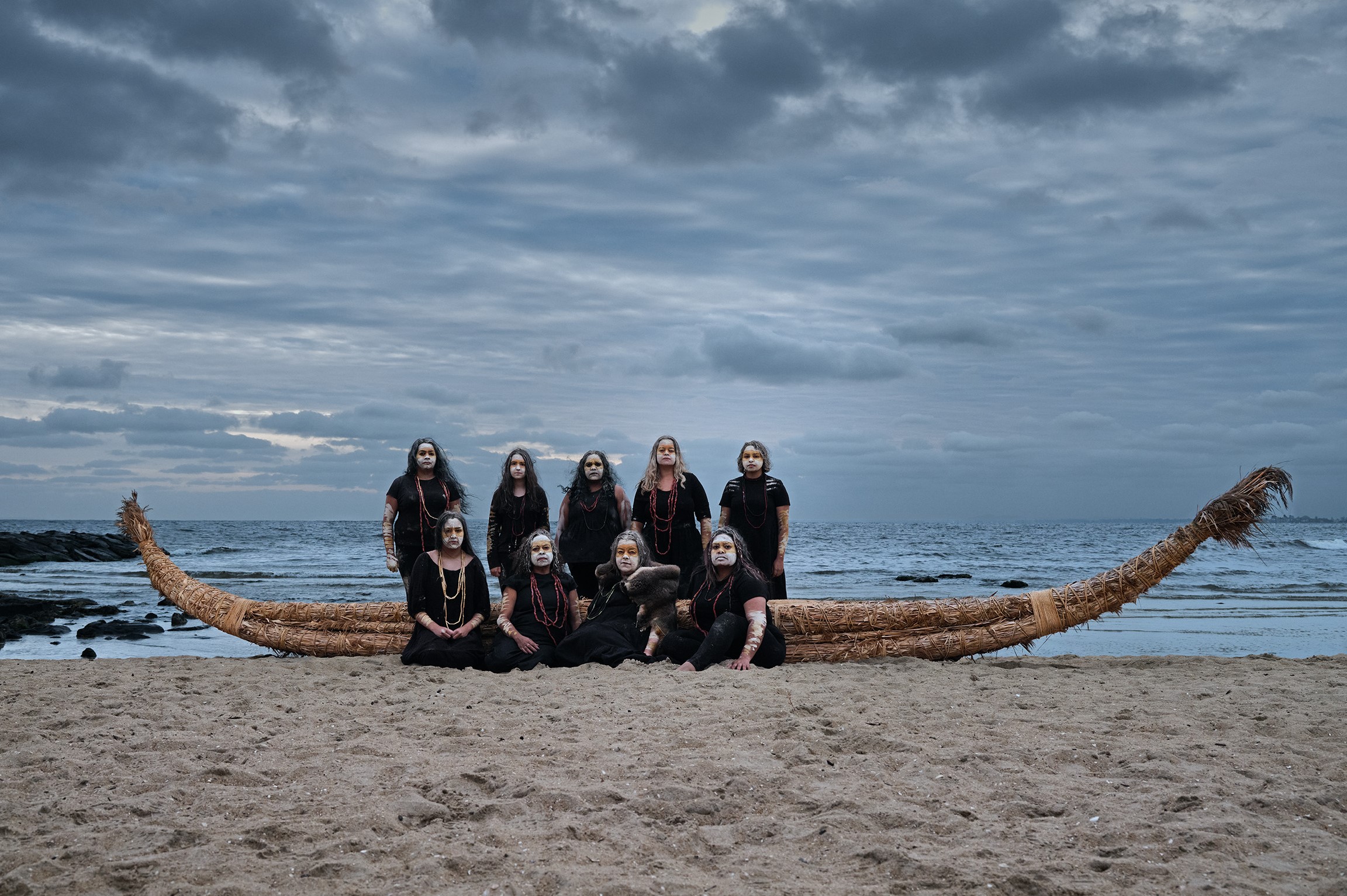







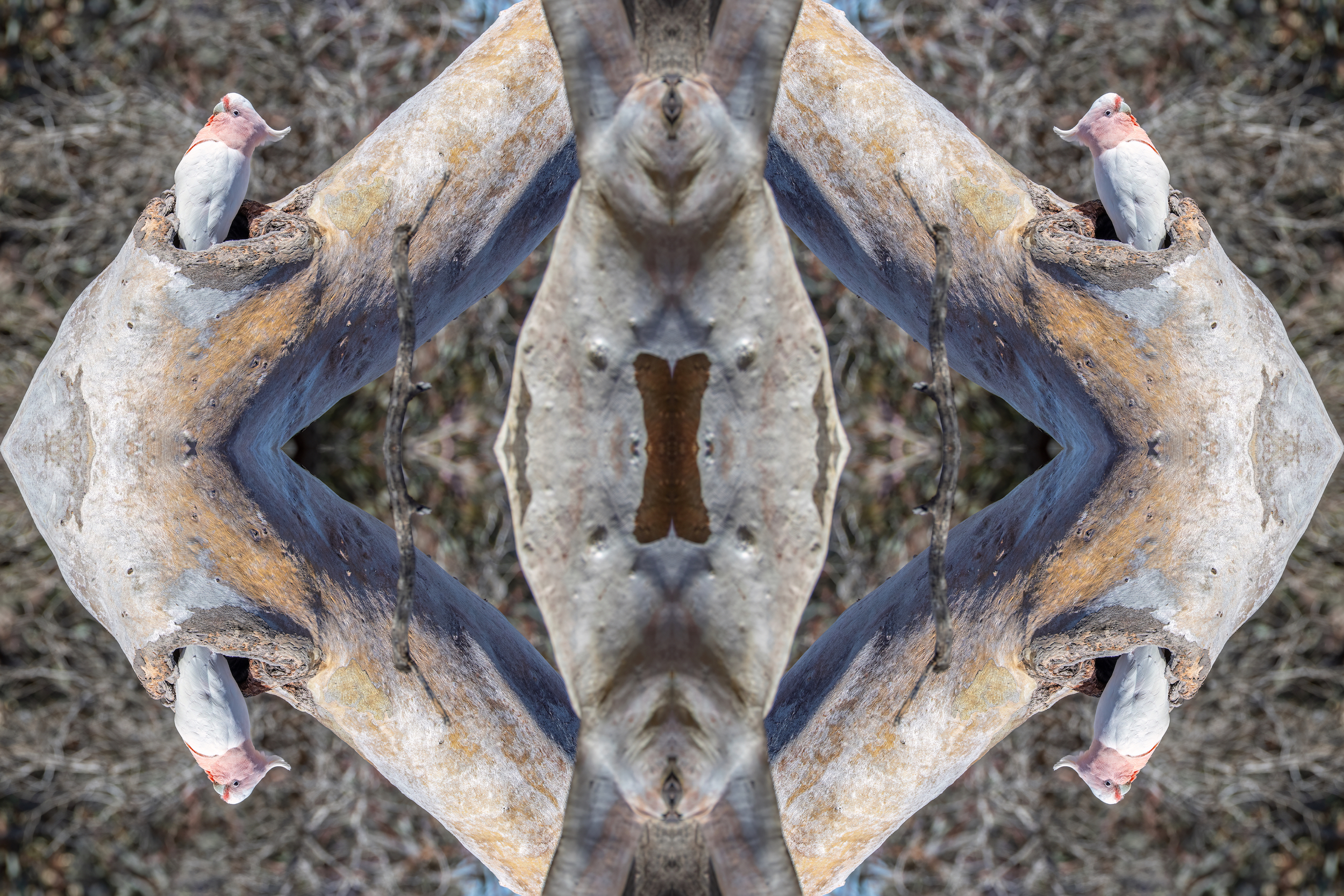
 #7&work-image=https://vivienandersongallery.com/wp-content/uploads/04.-Kent-Morris_karta-kartaka-pink-cockatoo-7_WEB-2023.jpg&work-artist=Kent Morris )
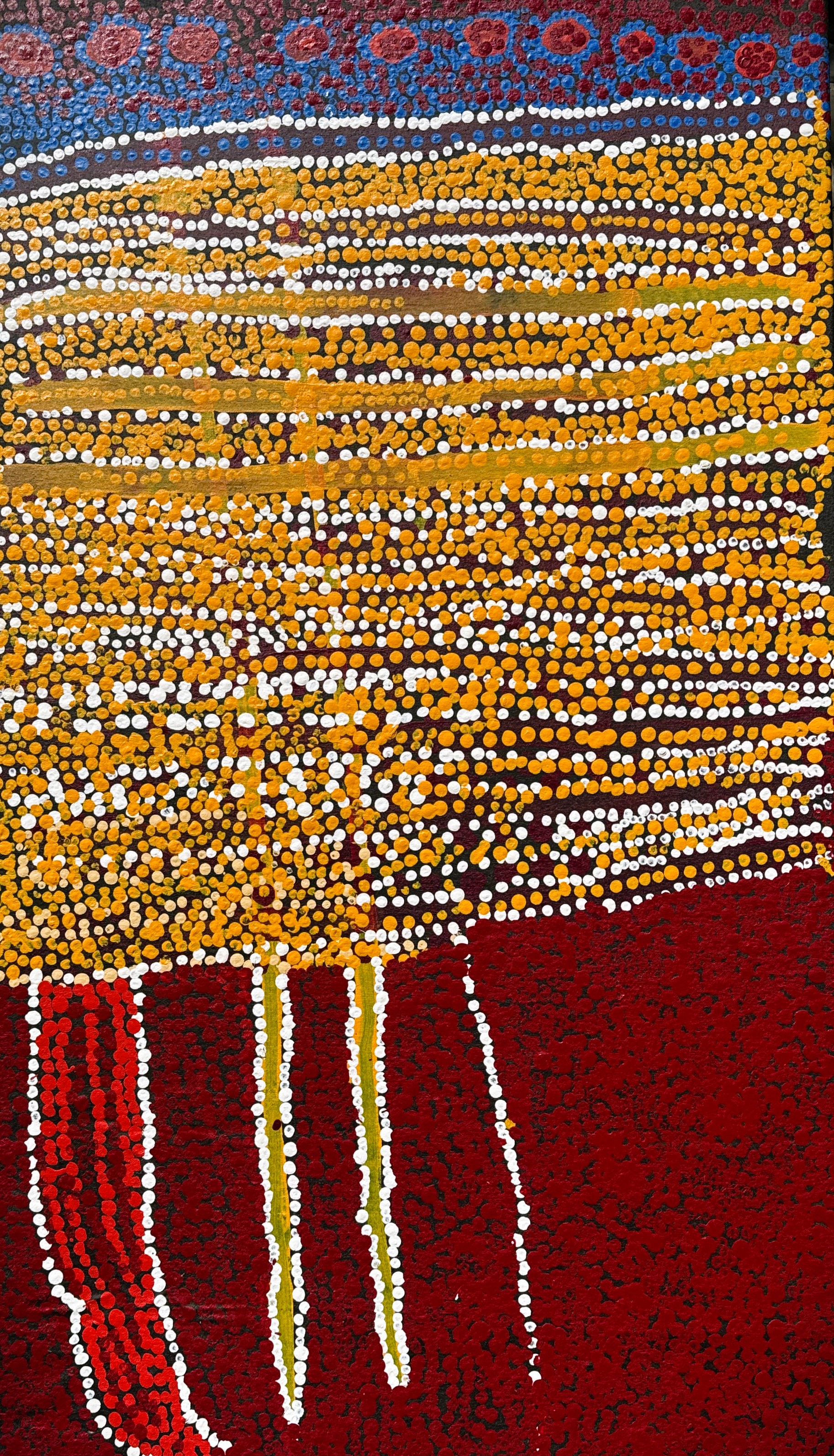

Yannima Tommy Watson c. 1935 – 2017
Pitjantjatjara
Yannima Tommy Watson was a senior Pitjantjatjara law man, born circa 1935 at Anumarapiti, approximately 75 kilometres west of Wingellina in Western Australia. During his early adulthood, he spent time at Ernabella Mission, where he was known as Tommy Yannima Pikarli Watson, and later worked as a stockman on cattle stations across the region.
While employed at Papunya, Watson encountered Geoffrey Bardon and witnessed the formative years of the Papunya Tula art movement, an experience that would later resonate strongly within his own artistic practice. Despite this early exposure, he did not begin painting until 2001, when he produced his first work for Irrunytju Arts, the art centre at Wingellina. His public debut in Alice Springs followed in 2002 at the Desert Mob exhibition.
Watson’s rapid ascent within the contemporary art world was marked by the sale of his painting Kukutjara (2003), which achieved $36,300 at the Irrunytju Art Auction, produced in collaboration with Vivien Anderson Gallery to raise funds to secure the Irrunytju Art Centre.
In 2005, he was commissioned with his peers, Ningura Napurrula, Lena Nyadbi, Michael Riley, Judy Watson, John Mawurndjul, Paddy Bedford, and Gulumbu Yunupingu, to produce a design for the ceilings of the curatorial building at the Musée du quai Branly in Paris. The museum grew out of the extraordinary collection of the former Musée de l’Homme and now includes a major installation by Maree Clarke.
In The Sydney Morning Herald, John McDonald described Watson as “a master of invention and arguably the outstanding painter of the Western Desert,” likening his use of colour to that of Henri Matisse.
This painting is a rare work from the artist’s studio practice at Irrunytju Art Centre.



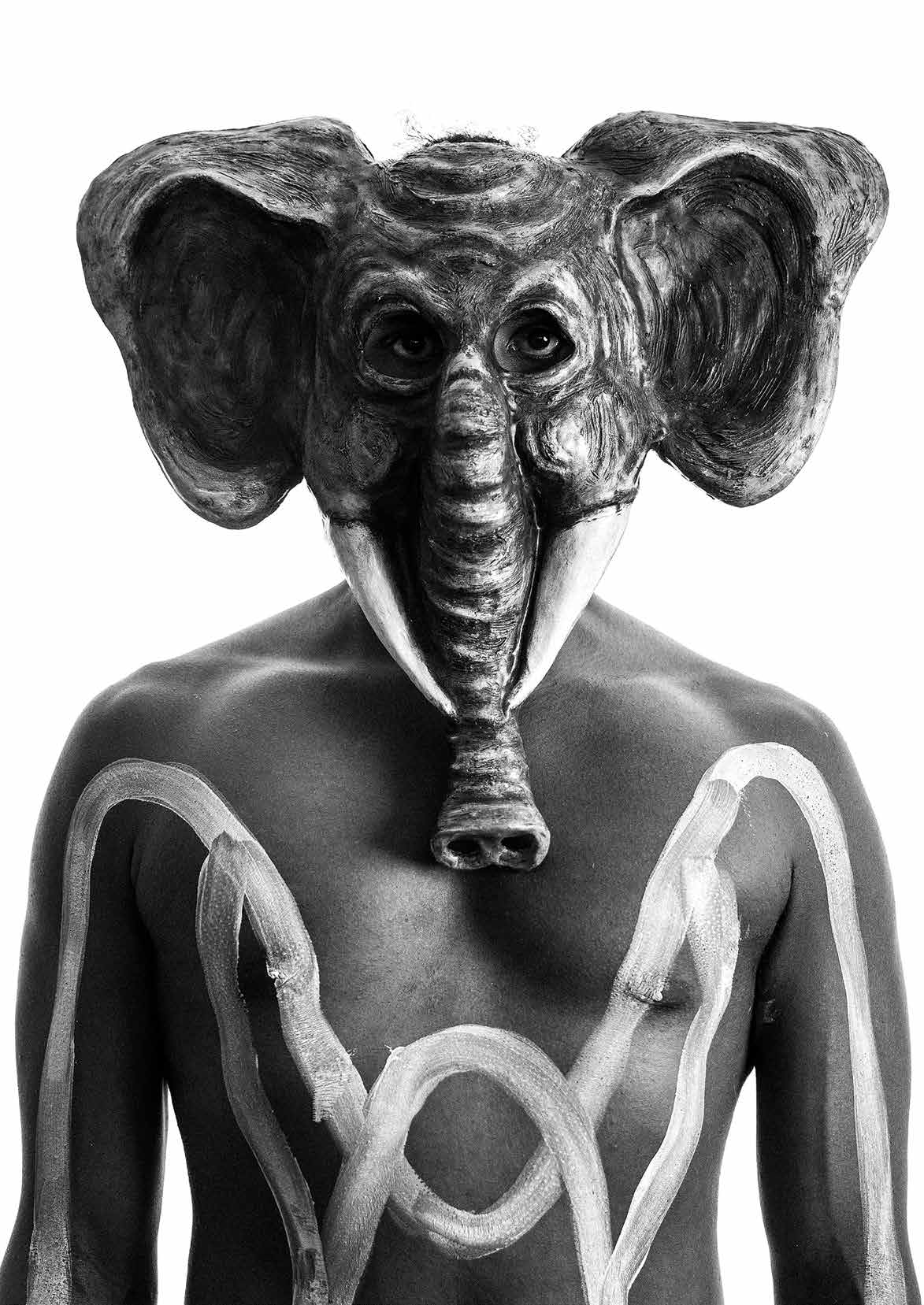

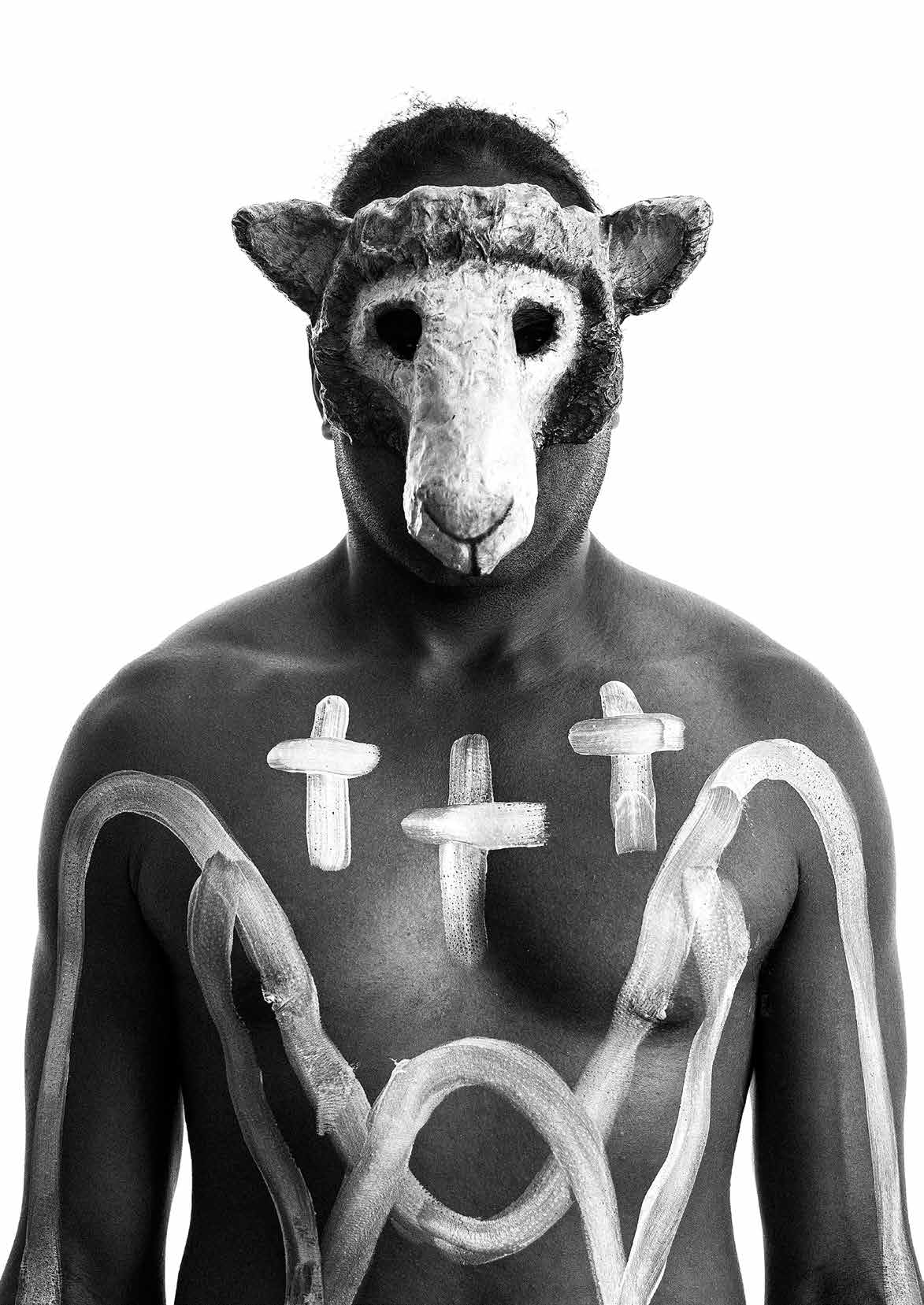

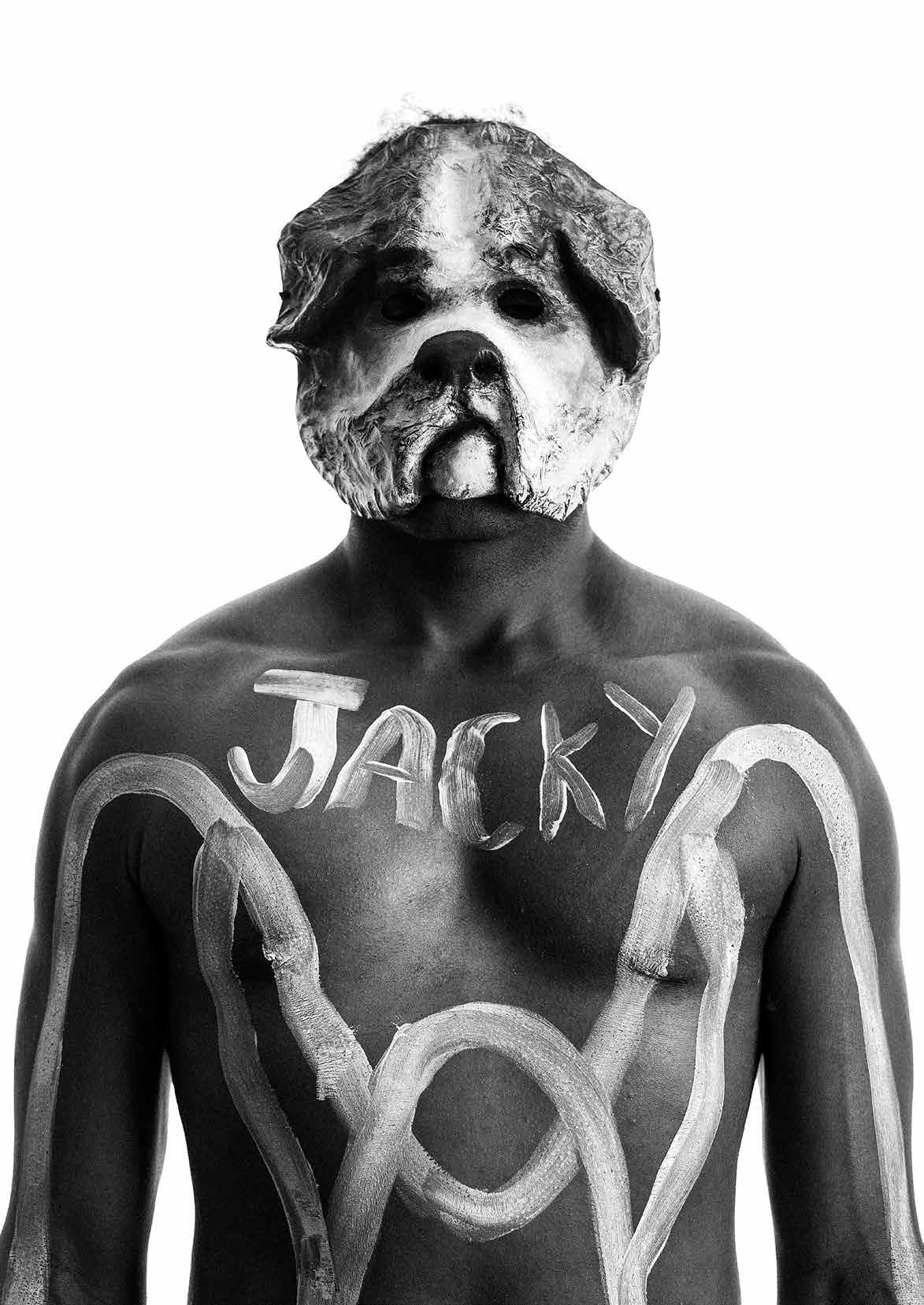

Nathanael Edwards 1986 –
Innisfail, Far North Queensland, Australia
Nathanael Edwards is a Dyirribarra and Bagibarra emerging photographic artist from Far North Queensland, Australia, whose practice examines identity, cultural continuity, and the intergenerational effects of colonial policy on First Nations peoples.
Working at the intersection of documentary reference and conceptual portraiture, Edwards uses photography as a platform for truth-telling, historical recovery, and the assertion of cultural sovereignty.
His work is deeply informed by the story of his grandfather, Bertie Purcell, born in a Townsville jail cell and later raised on Palm Island under government control. Purcell’s experiences of racial categorisation, forced displacement, and exclusion from cultural practice resonate strongly in Edwards’ exploration of belonging, rupture, and the inherited weight of unfinished histories.
As one of the last male artists with a direct bloodline to the Bagirbarra clan—a group nearly obliterated during colonisation—Edwards approaches his practice with a profound sense of responsibility. His images blend symbolism, lived narrative, and political sharpness to challenge dominant national myths and illuminate ongoing injustices, including the contemporary removal of First Nations children.
Through this work, Edwards positions photography as an instrument of cultural preservation and national dialogue, offering an urgent and compelling voice within Australia’s contemporary art landscape and beyond.
Nathanael will stage his first solo exhibition at Vivien Anderson Gallery in July 2026.

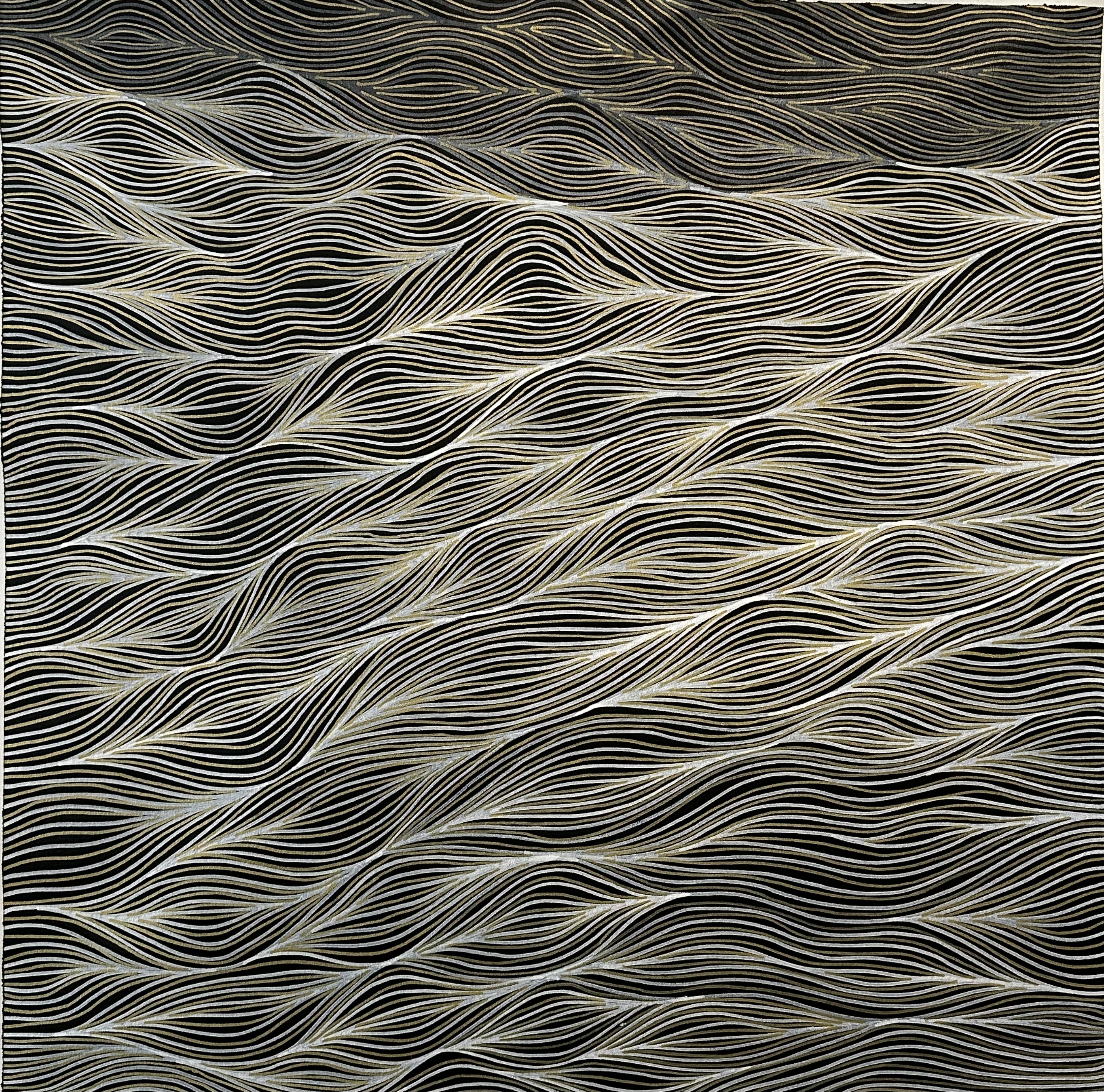
&work-image=https://vivienandersongallery.com/wp-content/uploads/Photo-4-2-2026-14-41-29.jpg&work-artist=Hayden Wilson )
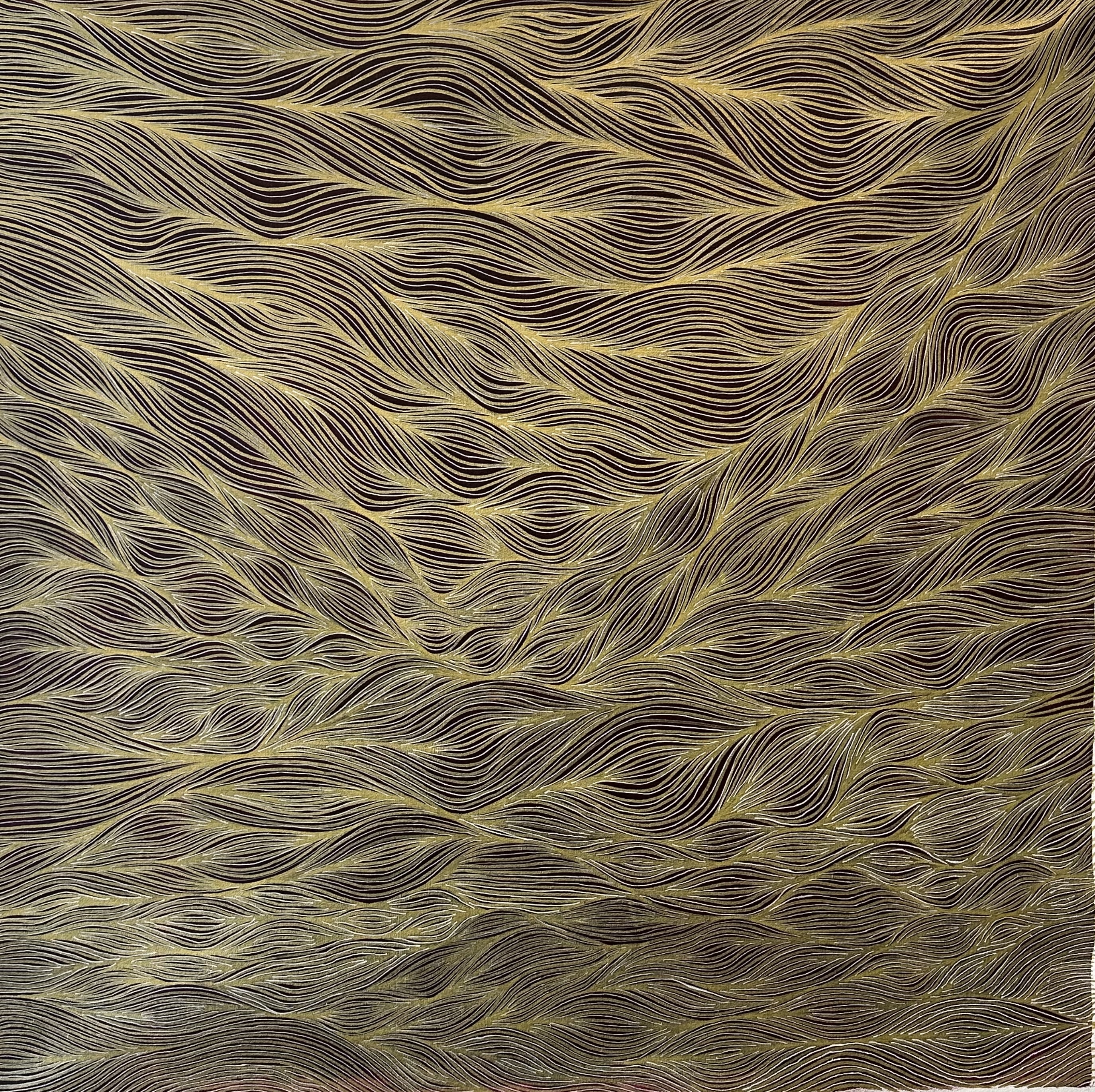
&work-image=https://vivienandersongallery.com/wp-content/uploads/Photo-4-2-2026-14-43-32.jpg&work-artist=Hayden Wilson )
Hayden Wilson (Regina’s grandson)
The son of Grace Dodson and grandson of Annunciata Dartinga and Regina Pilawuk Wilson, Hayden is surrounded by artistic excellence. He completed Year 12 studies in 2021 and now works full-time at the Art Centre.
Language: Tymirri. Dreaming: Emire (olive python).
“My name is Hayden Jinjar Wilson. I’m a Tyemirri man from Peppimenarti. My two main totems are the Water python, which we call ‘Emira’ (Emire) in the Tyemirri language, and Deewin, which is the moon. I am named after the patriarch of my family, my grandfather Harry Jinjar Wilson. I come from a line of artists which include my grandmothers Regina Pilawuk Wilson and Annunciata Dartinga and also my mother Grace Dodson.
I like to paint what is significant to me and what has shaped who I am now as a person: the saltwater waves of my Kawu’s Country; Ngudaniman, where I spent the other half of my childhood with my mother’s side of the family; Deewin and Emire—both totems I feel connected to; and the sand bubbler crabs that my cousins and I used to chase on the beaches of Ngudaniman. I’ve always admired the patterns they make with small balls of sand, which inspired me to interpret those designs into Durrmu (dot) paintings as a tribute to the crabs that made my childhood fun.
I’ve also painted the didjeridoo, which is my grandmother’s totem. I paint both linear and Durrmu paintings because both contribute to how I translate real-life experiences and memories into paintings. The colour palette I use consists of the colours of water, sky, and environment, alongside strong black and white to represent the spiritual world (Dreaming).”
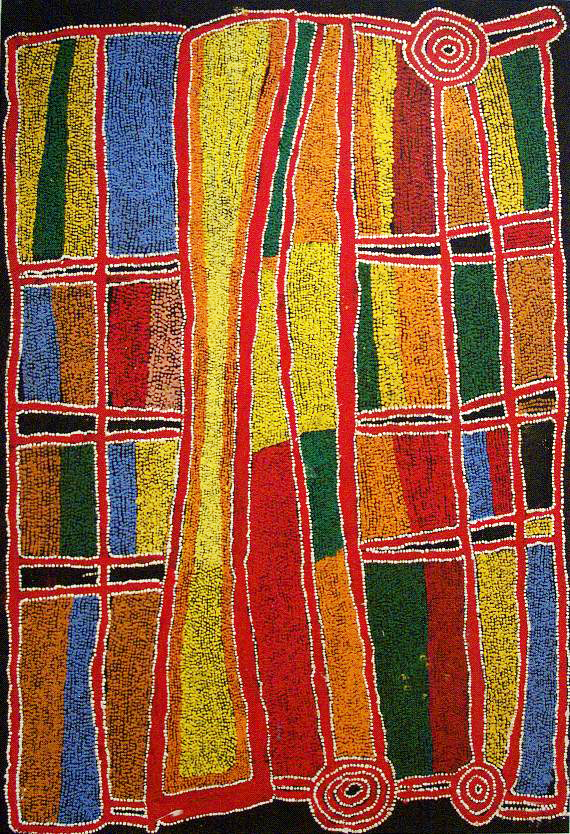

Kumanara Nyakul Dawson 1935 – 2007
Hetty Perkins, curator of Aboriginal and Torres Strait Islander Art at the Art Gallery of NSW, described Dawson as a man of immense wit and wisdom and a master craftsman.
She said Dawson’s work, which hangs in the National Gallery of Victoria, brought people from his Ngaanyatjarra area to national attention.
“At the opening of the Musée du quai Branly in Paris (last June), he was an incredible ambassador for Australia and our people. He was at ease amongst the international milieu of dignitaries.”
Kumanara Sandy Brumby c. 1930 – 2018
Sandy Brumby was born on Country in the bush at Victory Downs, an outstation near Pukatja (Ernabella), where he was raised alongside his parents, brother, and sister. As a young man, he worked at Mount Cavanagh, a cattle station near Kulgera in the Northern Territory, employed as a stockman undertaking mustering, fencing, and the general care of cattle.
He met his wife, Tjukapati Nola Brumby, in Pukatja, after which the couple lived for a period in the Amata community before eventually settling in Pipalyatjara. There they raised two children, a son and a daughter. Brumby lived in the Pipalyatjara region for many decades, predating the formal establishment of both the Kalka and Pipalyatjara communities.
In 2010, in his sixties, Brumby took up painting for the first time and attended the Ninuku art centre with dedication, having discovered both a profound passion for painting and a compelling need to articulate his life story through visual means.
The iconography of his work recalls motifs found in ancient rock and cave paintings in the Uluru–Kata Tjuta region. His paintings are raw and assertive, expressing a deep and enduring connection to Country and culture. He demonstrates an intuitive sensitivity to colour, employing a broad and vibrant palette in which hues resonate harmoniously.
Despite the relatively short duration of his artistic career, he generated great excitement and his paintings have been acquired by major public institutions, including the National Gallery of Victoria, the Art Gallery of South Australia, and the Queensland Art Gallery.
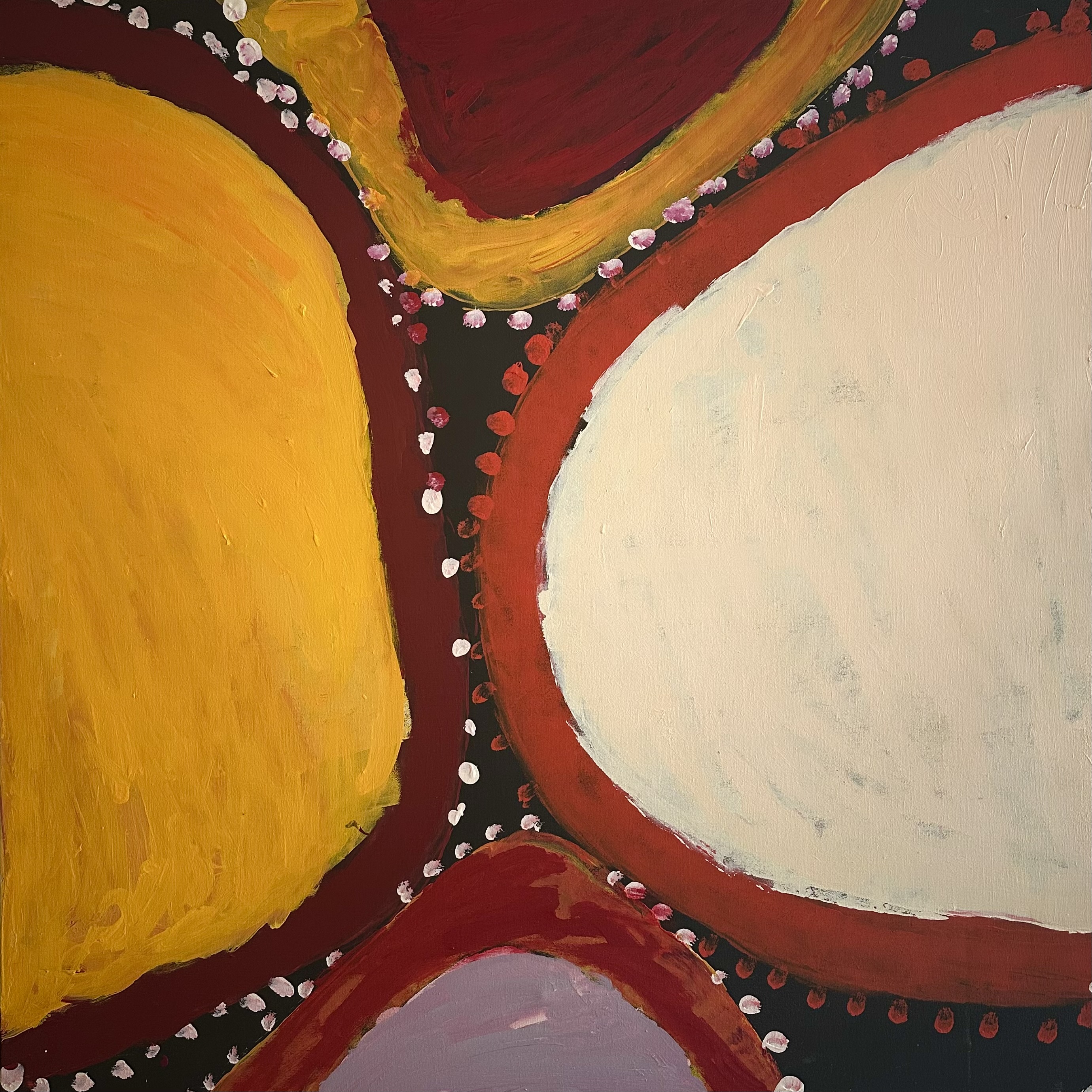

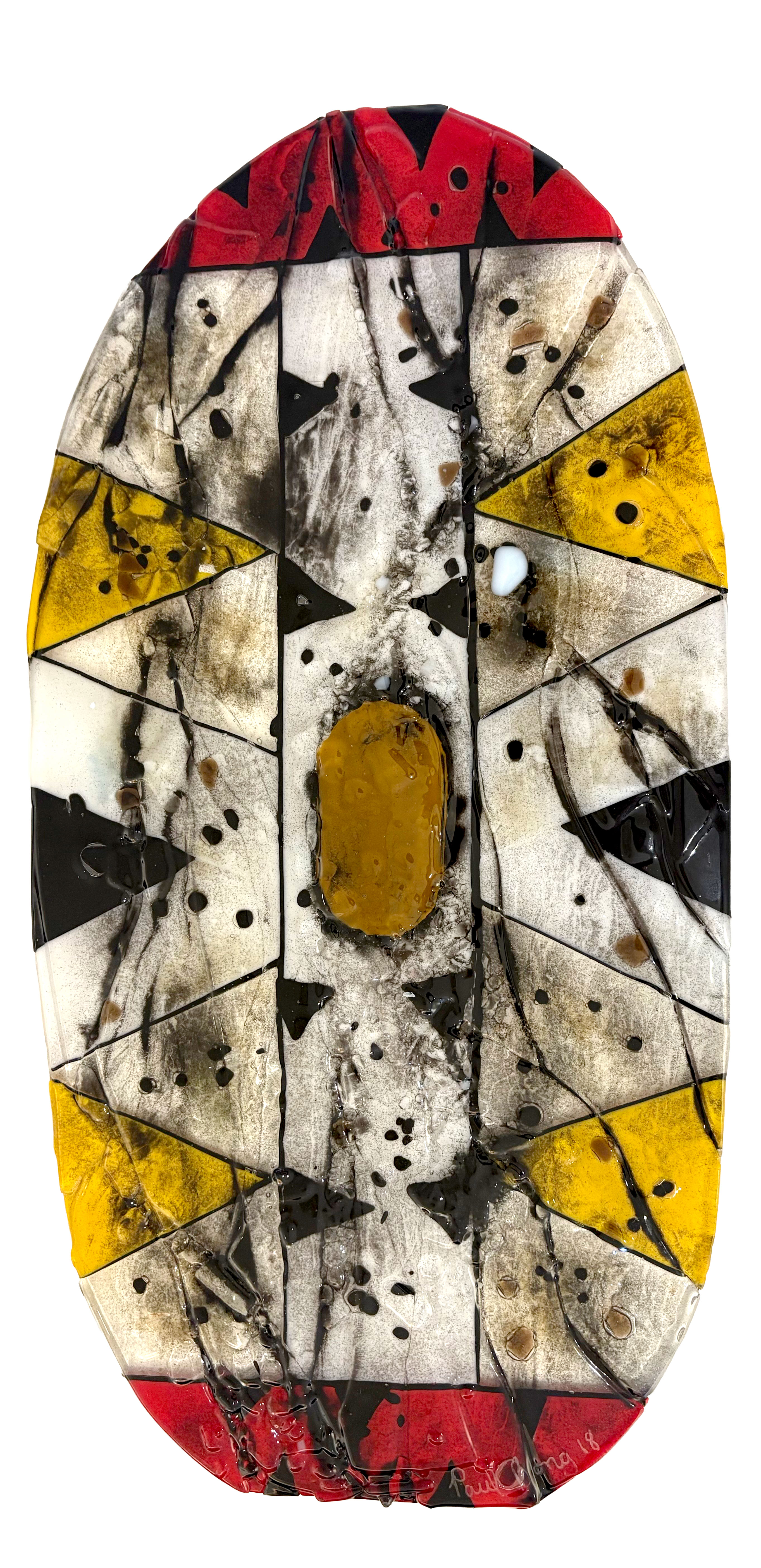
&work-image=https://vivienandersongallery.com/wp-content/uploads/IMG_8176.jpg&work-artist=Paul Bong )
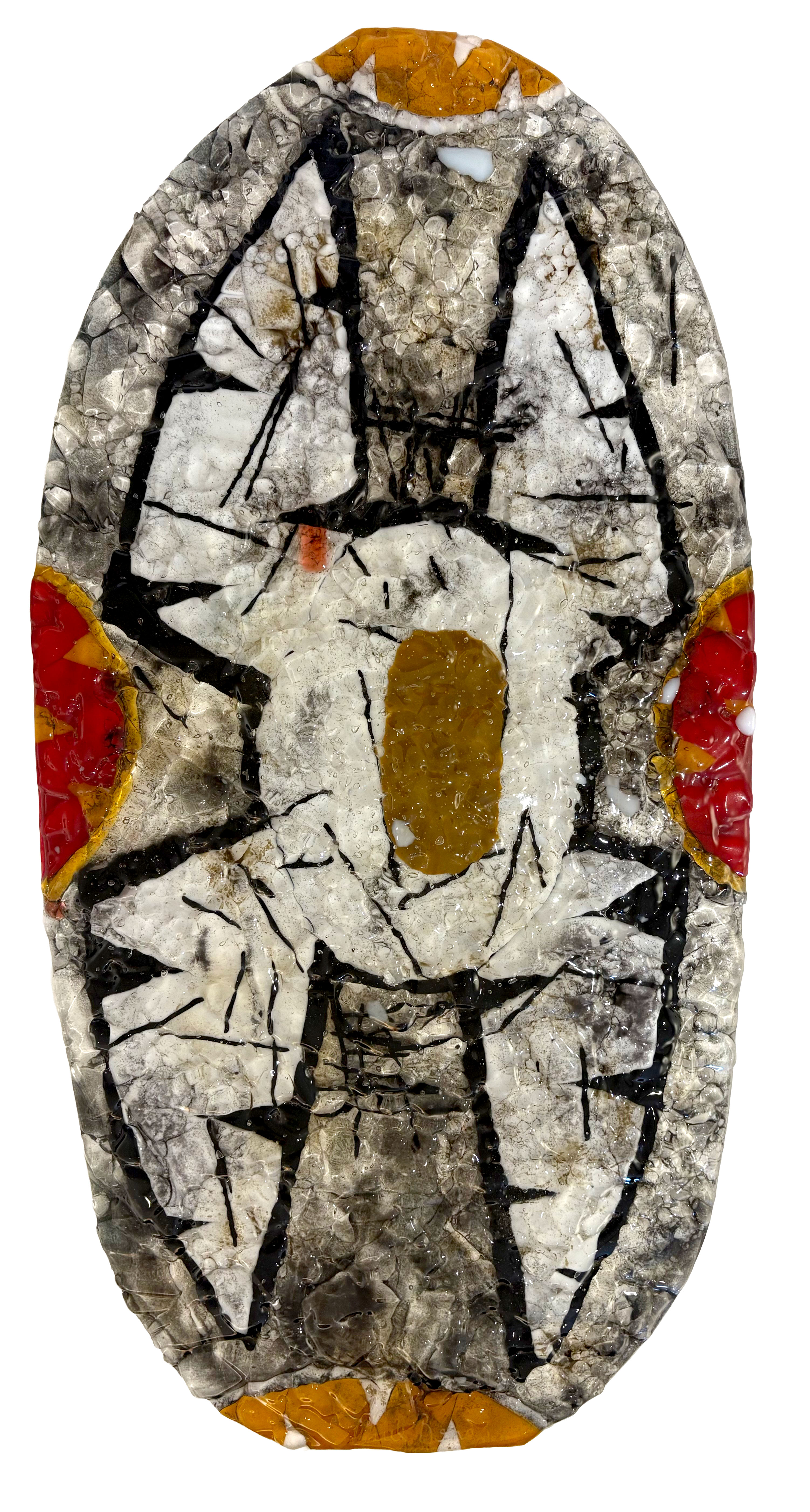

Paul Bong
Paul Bong (also known as Bindur Bullin) is a descendant of the Yidinji people, whose ancestral lands encompass the fertile rainforest region extending from Cairns in the north to Babinda in the south, and westward into the Atherton Tablelands as far as Kairi. His lineage is deeply embedded in this Country: Bong’s great-grandparents were both tribal Elders during a period when Yidinji sovereignty over these lands remained intact. His father, George Bong, was likewise raised with traditional knowledge and spoke the Yidinji language (Yidiny). However, as a result of colonial assimilation policies, he was prohibited from speaking his language while attending school and was compelled to abandon cultural practices in order to conform to white Australian society. These disruptions fractured the intergenerational transmission of language, cultural knowledge, and heritage within the Bong family.
In his practice, Bong integrates traditional Yidinji visual motifs with contemporary techniques, creating works in which each design is imbued with specific spiritual and cultural significance. Through this synthesis, his art operates as both a personal act of cultural reclamation and a broader assertion of Indigenous presence, continuity, and resilience.
The Yidinji shield, traditionally produced for ceremonial use and physical defence, holds profound cultural significance as a visual emblem of protection, authority, and resistance. Within Bong’s practice, the shield is reinterpreted and reactivated not as a historical artefact, but as a living form through which Yidinji sovereignty is asserted and sustained. Functioning simultaneously as protector and bearer of narrative, the shield anchors Bong’s works within ancestral lineage while affirming the enduring presence of Yidinji people on Country.
As the shield fell to the ground all those years ago its impact was to reverberate across the Australian continent, its shock waves still washing onto the shores of Aboriginal culture today.”
— Paul Bong